

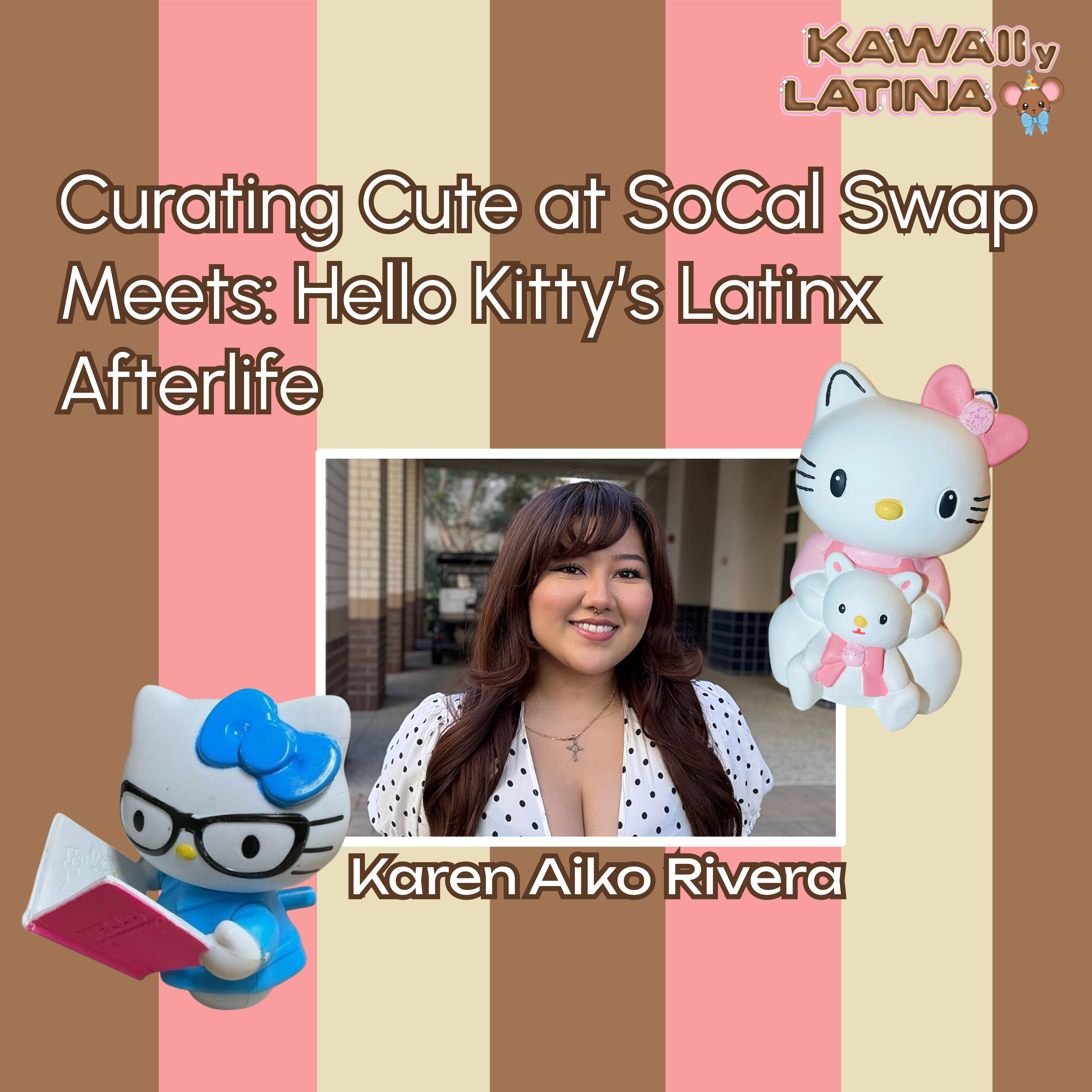
At the end of last year, I got a message in my inbox that was super exciting. Karen Aiko Rivera, a first generation student majoring in Political Science and Chicano/Latino Studies reached out explaining how she came across the blog while researching for her year-long honors thesis centered around the cultural significance of Hello Kitty and kawaii aesthetics within Latinx communities like swamp meets and working-class communities. I was so extremely flattered that she resonated with the archive I’ve been creating with the blog and that she found it helpful with her academic studies. Karen ended up sending over questions for me to answer about the origin of Kawaii y Latina and my personal thoughts on community, representation and my creative process. I was also elated to find out that this niche I’ve dedicated a lot of my time to documenting and creating a community behind, was being written and studied academically.
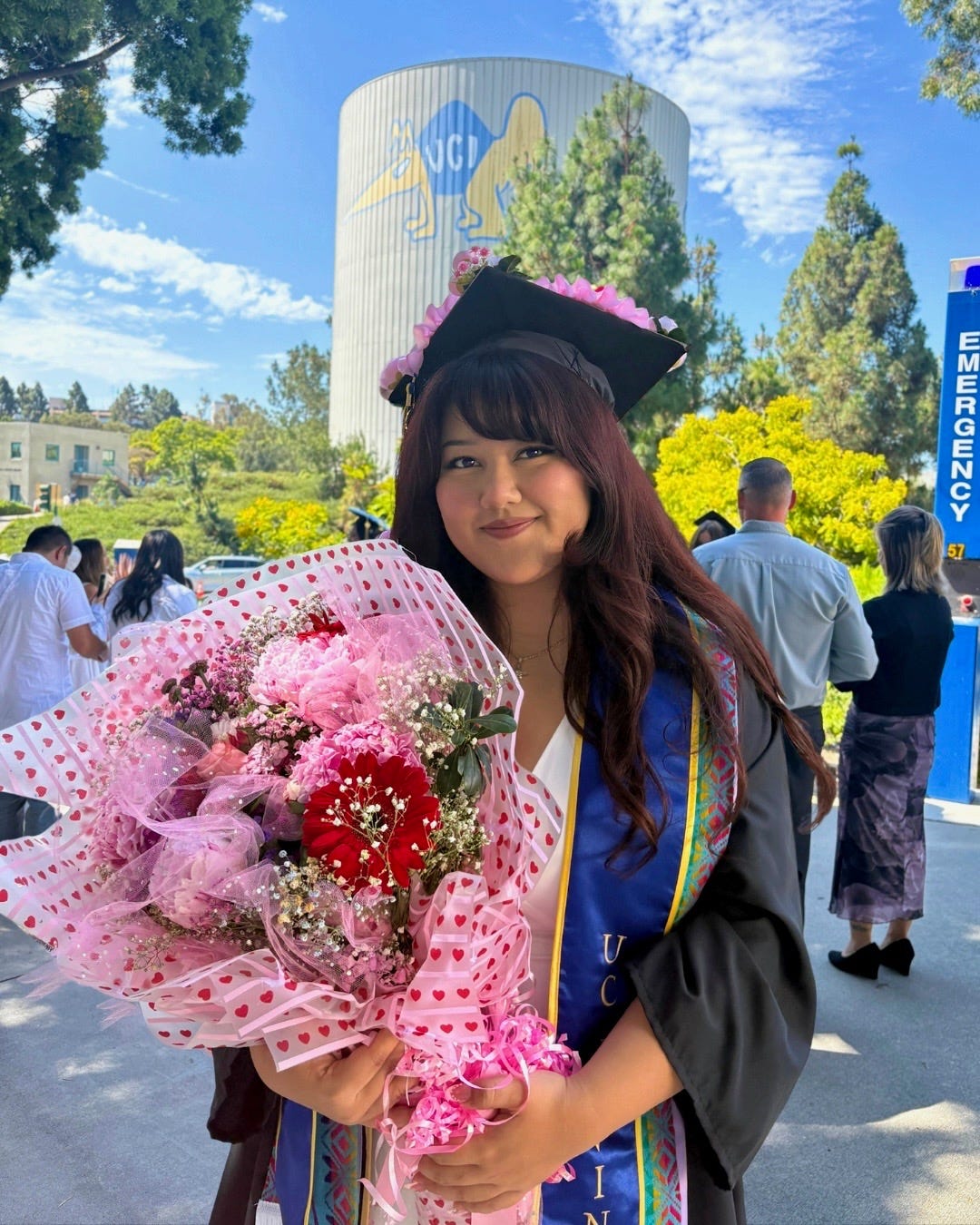
Fast forward to this year and Karen has graduated from the University of Irvine with a B.A. in Political Science and Chicano/Latino Studies and has completed her thesis, “Curating Cute at SoCal Swap Meets: Hello Kitty’s Latinx Afterlife.” Although the thesis is not yet public, Karen was gracious enough to send over some of her thoughts about the process of completing her thesis and her identity growing up being influenced by both Japanese and Mexican culture:
On the process of writing my thesis, I have been so incredibly lucky to have so many professors who supported me and my ideas. To the point that I think they are also reflected in the many twists and turns I had while trying to bring this research to fruition, since everyone had slightly different advice or new ideas for me to consider.
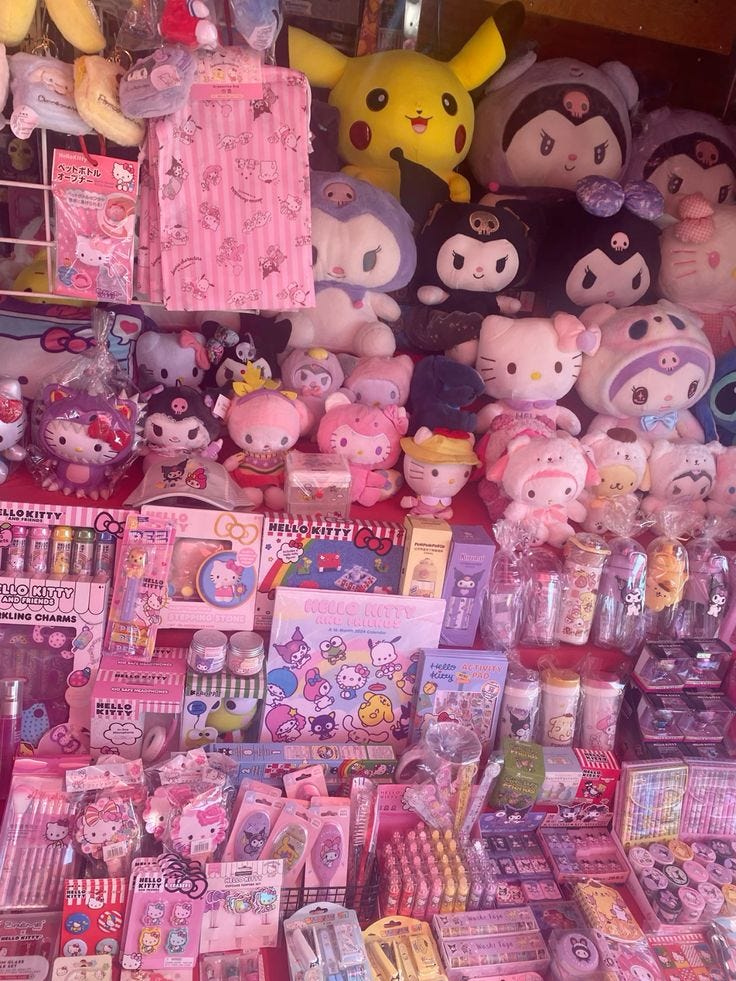
The title for my thesis, “Curating Cute at SoCal Swap Meets: Hello Kitty’s Latinx Afterlife,” is a mouthful to say the least, but I feel like it encapsulates the multiple threads of my research pretty well. There is the “Cool Japan” Hello Kitty as sold to you by Sanrio. She might be seen as the global ambassador of kawaii, whose cuteness shines so brightly as if to blind you from Japan’s imperial history. However, in Southern California swap meets, Hello Kitty looks a bit different from what Sanrio sells. Not commercially licensed, but not lacking in character either. I argue that Hello Kitty is transformed through a Latinx reimagination. This process of making Hello Kitty Latina is built through the aggregate of conscious efforts to build relationships and foster community across swap meet stalls and online algorithms. The swap meet’s true barrier of entry is not the $1-3 entrance fee, but repeat interaction. Prices are negotiated based on who you know, the languages you speak, your gender, your age, and the relationships you have built with vendors. Your perceived knowledge and trustworthiness are constantly evaluated through your demeanor, affect, and frequency of return, all of which shape your experience within the swap meet. When combined with kawaii culture, I believe that swap meets foster a unique identity for Hello Kitty and the people who love her.
On a more personal note, I have a lot of feelings about Hello Kitty at the swap meet as the daughter of Japanese (my mother) and Mexican (my father) immigrant parents. The American understanding of being mixed-race is often very binary, largely shaped by the history of chattel slavery. The Japanese understanding of race is often expressed through the concept of being “half” (ハーフ, haafu), while the concept of being mestizo in Mexico is directly tied to the history of Spanish imperialism and its caste system. I did not grow up knowing this history, but as I have gotten older, understanding these histories has helped me pinpoint the tensions I felt with my identity growing up. I think feeling unsettled about your identity as a child is a common experience, but as an adult, I have come to cherish the moments when I see Japanese and Mexican cultures collide even more because I now better understand what made those intersections feel so complex and unsettling. Therefore, seeing Hello Kitty at the swap meet, or discovering the Kawaii y Latina archive, and conducting this research has been incredibly affirming for me. I never really considered myself a particularly imaginative person or good writer so to put this all together into a novel argument has been tough, but I think that it was well worth it!
Huge thank you to Karen for including Kawaii y Latina in your research! If you’d like to read more about Karen and her experience at UCI, you can check out this post from the University highlighting her work. I’ve been so excited to share this story with the blog, as it inspires me that the experience of the kawaii Latina is being documented academically. In the short time that this blog has existed, it’s led me to meet so many like minded people. Moments like these are a special reminder of how this blogs has resonated with others, and that really means so much to me when a lot of the work I do for this project is just me and my computer. ꒰ঌ( ᴗ͈ˬᴗ͈)໒꒱
As someone who grew up in LA with exclusively knockoff hello kitty and sanrio items, I'm so excited for Karen Aiko Rivera's thesis to be public!! Moving to the east coast we have nothing like the swamp meet culture here! Thank you for reporting on all things kawaii in the Latine culture <33